C.A.M.E.C.A. im Archiv von Jukebox-World

Scopitone ST16 (1960)   •••   Scopitone ST36 (1962)
C.A.M.E.C.A. = Compagnie d'Applications Mécaniques à l'Eléctronique, au Cinéma et à l'Atomistique
 

Copyright

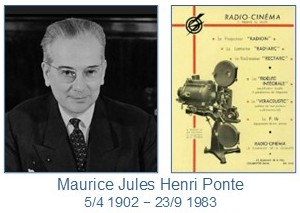
Compagnie Radio-Cinéma wurde am 21. Juni 1929 von Maurice Ponte als Tochtergesellschaft der CSF (Compagnie Genérale de la Télégraphie Sans Fil) gegründet, Hauptsitz ebenfalls in der "Boulevard Haussman" in Paris.
"Radio" steht für den ersten Namen aller Tochtergesellschaften von CSF und "Cinéma" steht für die Hauptaufgabe dieser Tochterfirma: die Installation von Tonanlagen in Kinosälen.
1954 wird aus Radio-Cinéma C.A.M.E.C.A. Dieser Name steht bis heute.
Es ist zu bemerken, dass 1929 auch der Beginn der Tonfilme war.
1967 wird die CSF von der britischen Thomson-Brandt-Gruppe gekauft, die bereits SFRT  mit den Film-Musikboxen Cinematic und Cinecolor besitzt.

Der Name "Scopitone" setzt sich zusammen aus den (alt)griechischen Wörtern "scopein" und "tonos" was so viel bedeutet wie „beobachten“ und das Wechselspiel der Noten einer Tonleiter.


Compagnie Radio-Cinéma was founded on June 21, 1929 by Maurice Ponte as a subsidiary of CSF (Compagnie Genérale de la Télégraphie Sans Fil) with headquarter too on "Boulevard Haussman" in Paris.
“Radio” is the first name of all subsidiaries of CSF and “Cinéma” stands for the main purpose of this subsidiary: The installation of sound systems in movie theaters.
In 1954, Radio-Cinéma became C.A.M.E.C.A. This name is still used today.
It should be noted that 1929 also marked the beginning of sound movies.
In 1967 CSF gets purchased by the British Thompson-Brandt-Group wich owns already SFRT with film jukeboxes Cinematic and Cinecolor.

The name Scopitone is an amalgam of the two (Ancient)Greek words scopein and tonos meaning to observe and the interplay of the notes on a musical scale.


Compagnie Radio-Cinéma a été crée le 21 juin 1929 par Maurice Ponte en tant que filiale de l'entreprise CSF (Compagnie Générale de la Télégraphie Sans Fil), le siège social est également situé « boulevard Haussman  » à Paris.
« Radio » est le premier nom de toutes les filiales du CSF et « Cinéma » correspond à la mission principale de cette filiale : l'installation des système sonorisation dans les salles de cinéma.
En 1954, Radio-Cinéma devient C.A.M.E.C.A. Ce nom existe encore aujourd'hui.
Il faut noter que 1929 marque également le début des films sonores.
En 1967 CSF est acheté par la britannique Thomson-Brandt-Groupe qui possede déjà SFRT avec les les film juke boxes Cinemaic et Cinecolor.

Le nom « Scopitone » est composé des mots grecs (ancien) « scopein » et “tonos”, ce qui signifie « observer » et et le jeu d'une gamme musicale.


There are several patents involved for models Scopitone. Those are either assigned for Radio Cinéma or CAMECA or by the inventors themselves.
CAMECA: Patent FR1,115,987 - filed 1956; based on patent FR 766,330 - filed 1933 by Radio-Cinéma for a Cinematographic sound projector for home use.
Further designers:
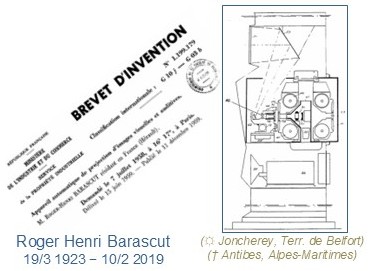
Designer Roger Henri Barascut - Patent for film projector BE580,442 - filed 1958 - he called it
"Ciné-Robot-Sonor"
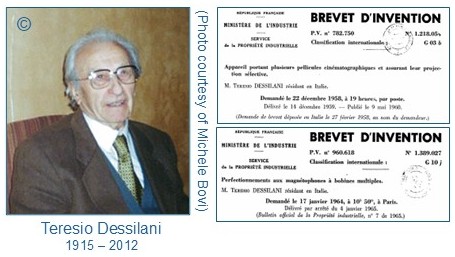
Designer Teresio Dessilani - Patent DE1112401 - filed 1958  |  DE128738 - filed 1958  |  DE10888804 - filed 1958  |  and more
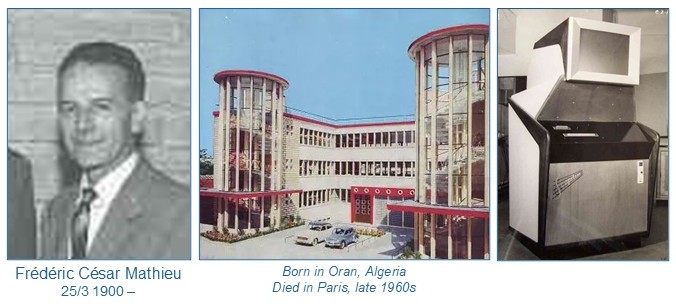
Technical Director and designer Fréderic Matthieu - Patent FR856,260 - filed 1939  |  US3,098,409 - filed 1960  |  US3,168,933 - filed 1962  |  CA647,283 - filed 1962
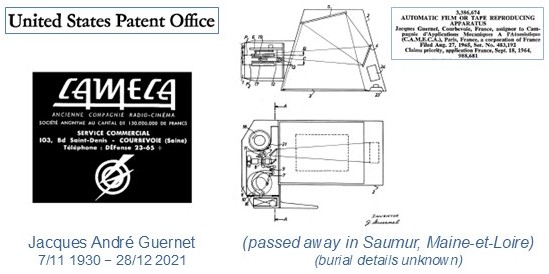
Designer Jacques Guernet - Patent US3,333,783 - filed 1964  |  US3,386,674 - filed 1965  |  DE1,267,543 - filed 1965  |  DE1,283,090 - filed 1967
 

Scopitone Archive     •••    26 mm film for Jukeboxes (Danish Jukebox-Archive)   •••   Cinebox & Scopitone (Michele Bovi)
 

Vertrieb Deutschland: Helmut Rehbock
Vertrieb England: Ditchburn
Vertrieb USA: Scopitone, Inc.
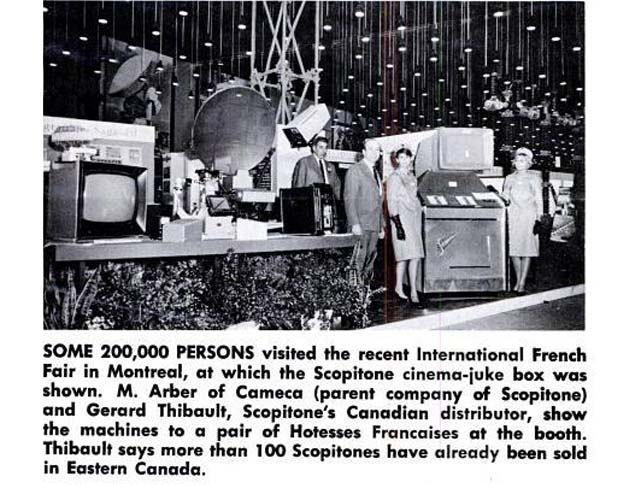
Vertrieb Kanada: Gerard Thibault

Französische Filmbox mit 36 Wahlen

  German distributor: Helmut Rehbock
UK distributor: Ditchburn
US distributor: Scopitone, Inc.
Canadian distributor: Gerard Thibault

French film-jukebox with 36 selections


Distributeur allemand: Helmut Rehbock
Distributeur UK: Ditchburn
Distributeur US: Scopitone, Inc.
Distributeur Canada: Gerard Thibault

Télébox francais avec 36 sélections

Scopitone ST16 (1960)
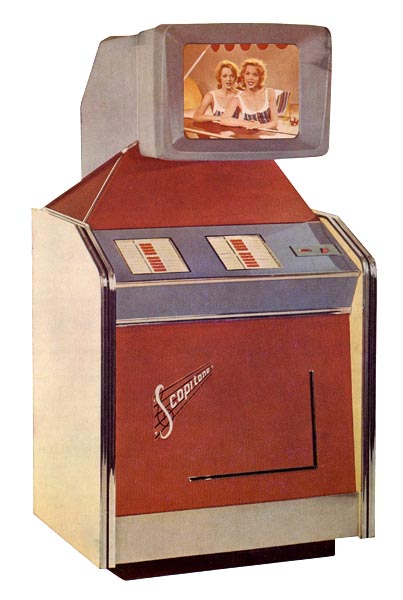
Cameca: Scopitone ST16


Billboard 28 - 12- 1992
Cameca: Scopitone ST16


Aschenbecher mit Scopitone Motiv     –     Ashtray with Scopitone motif
Photos courtesy of: David D.Cameca: Scopitone ST16
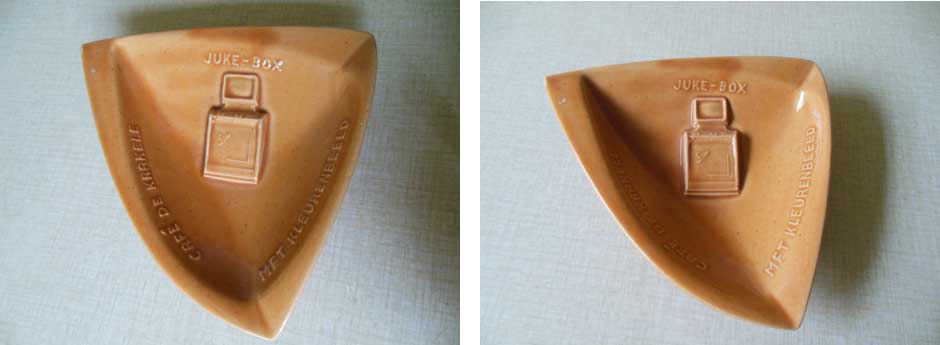
"Café de Krakele – Juke-Box – met Kleurenbeeld"     /     Café de Krakele – Juke-Box – with colour screen"

Café  de Krakele is a tearoom in Bruges, Belgium that still exists. In the Sixties it was a well known  place for Rock'n Roll dancing.


Scopitone ST36 (1962)
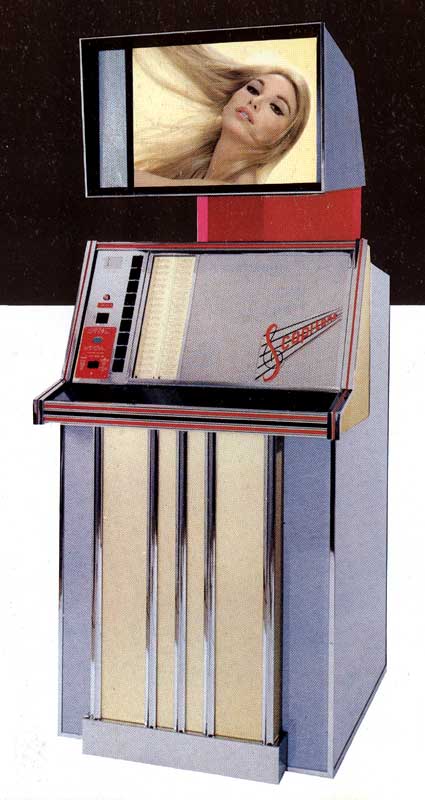
Cameca: Scopitone ST36

Billboard 30. May 1964: "Scopitone, the French cinema jukebox soon to be manufactured in Chicago, will be shown at an "insiders" cocktail party and press preview in the Beau Nash Room of the Ambassador West Hotel Wednesday (27) aftrenoon.
U.S. licensing rights for the machine were recently acquired by Tel-A-Sign, a public held manufacturer of point-of-puchase advertising signs. ... Tel-A-Sign has indicated that it will be manufacturing Scopitone in its Chicago plant by the end of the year. Some 100 units are already in the U.S.. The firm expects to have some 1,700 on location within the next two years."

Billboard 8. Aug 1964: "A. A. Steiger, president of Tel-A-Sign, Inc. .... said that the coorporation's prospects were greatly improved by the acquisitation of 80 per cent of Scopitone , Inc..
Scopitone is the US licensee for the coin-operated, film-projecting juke box manufactured by Cameca Corporation, Paris. Steiger said Tel-A-Sign will start production of the units, which are currently imported, by January, and plans to make 10,000 a year by 1966. He said Scopitone has orders for the next five years from distributors for 6,000 machines worth $24,000,000."


All information below courtesy of Gert Almind

Roger Henri Barascut (1923 - 2019)

Erfindung zum Filmprojektor, die er "Ciné-Robot-Sonor" nannte.
Er stellte sein Patent CAMECA vor.


Invention film projector which he called "Ciné-Robot-Sonor".
He presented his patent to CAMECA.

Roger Henri Barascut Film Pojector Scopitone


Frederico Dessilani (1915 - 2012)

Einer der Erfinder der Scopitone
Der aus Fara Novarese stammende Italiener Frederico Dessilani ist ein sehr bedeutender Erfinder des letzten Jahrhunderts. Zu seinen Erfindungen gehören unter anderem Rollschuhe, der Elektrorasierer mit flexiblen Köpfen und der Roboterhefter für die Gerbereibranche, um nur einige zu nennen.
Bislang ist uns nicht bekannt, wie Teresio Dessilani und Frederic Mathieu miteinander in Kontakt gekommen sind.


One of the inventors of the Scopitone
The Italian Frederico Dessilani, originally from Fara Novarese, is a very important inventor in last century. Among others roller skates, the electric razor with flexible heads, and the robotic stapler for the tanning industry are just a few to name.
So far we do not know how Teresio Dessilani and Frederic Mathieu got in touch with each other.

Teresio Dessilani Scopitone


Jacques Guernet (1905 - 1974)

Einer der Erfinder der Scopitone


One of the inventors of the Scopitone

Jacques Guernet Scopitone


Frederic Mathieu

Technischer Leiter CAMECA und einer der Erfinder der Scopitone


Technical director of CAMECA and one of the inventors of the Scopitone

Frederic Mathieu Scopitone


Maurice Jules Henri Ponte (1902 - 1983)

Gründer der Cie Radio-Cinéma


Founder of Cie Radio-Cinéma

Maurice Ponte Cie Radio-Cinéma Scopitone


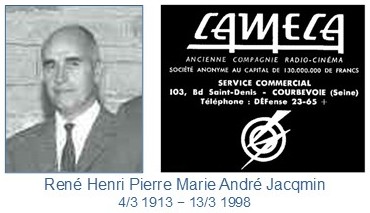
Rene Henri Pierre Marie Andre Jacqmin (1913 - 1998)

Leiter der Cie Genérale de la Télégraphie Sans Fil (CSF) Controlling-Abteilung


Head of Cie Genérale de la Télégraphie Sans Fil (CSF) controlling departement

Rene Jacqmin CSF


Die Angaben haben keinen Anspruch auf Vollständigkeit oder Richtigkeit.
Bei den (importierten) Boxen können im Laufe der Jahre durchaus Veränderungen vorgenommen worden sein. Copyright.

<<<   zurück zur Archiv-Übersicht

Ein Service von
Jukebox-World Jukeboxen Jukeboxes Jukeboxparts Jukebox parts
Copyright by Stamann Musikboxen