|
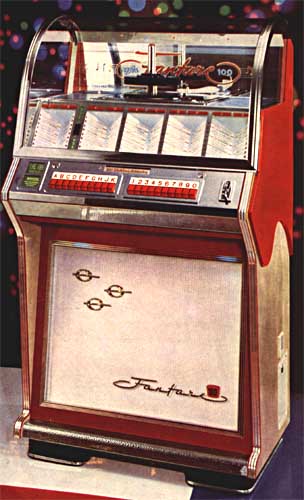
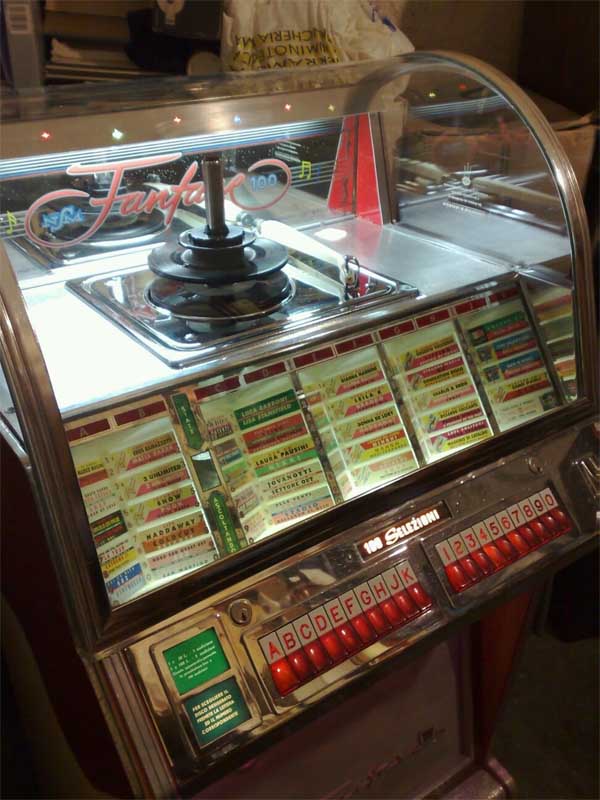
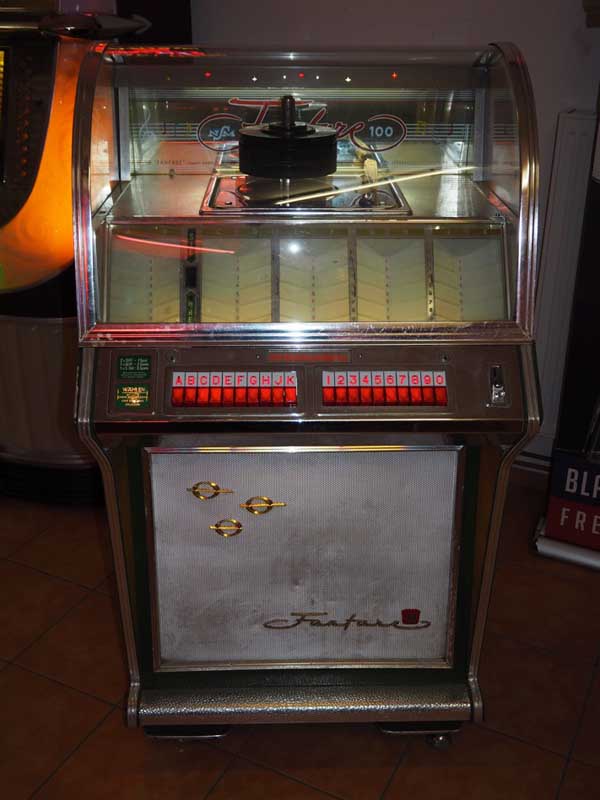
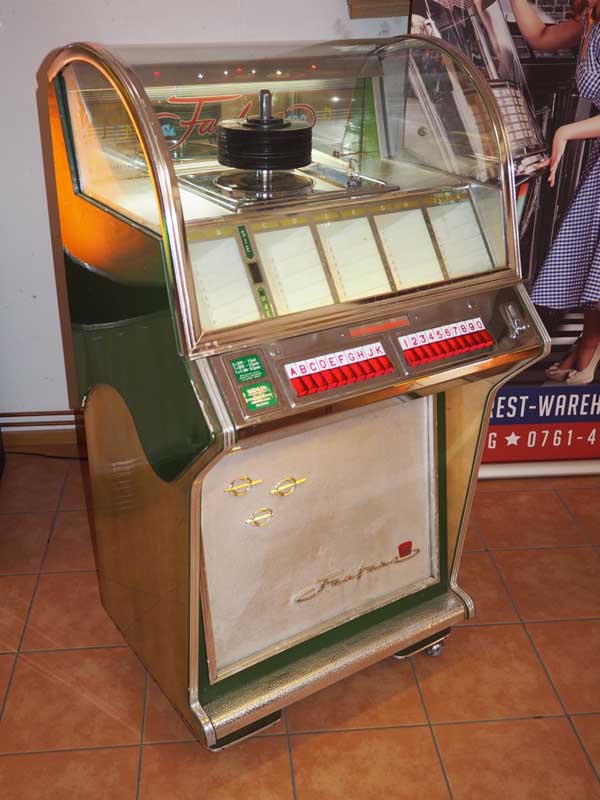
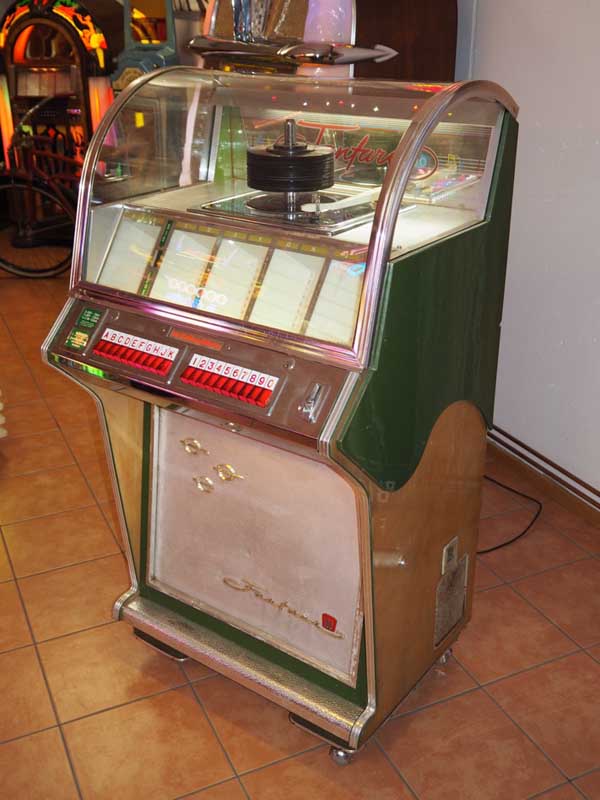
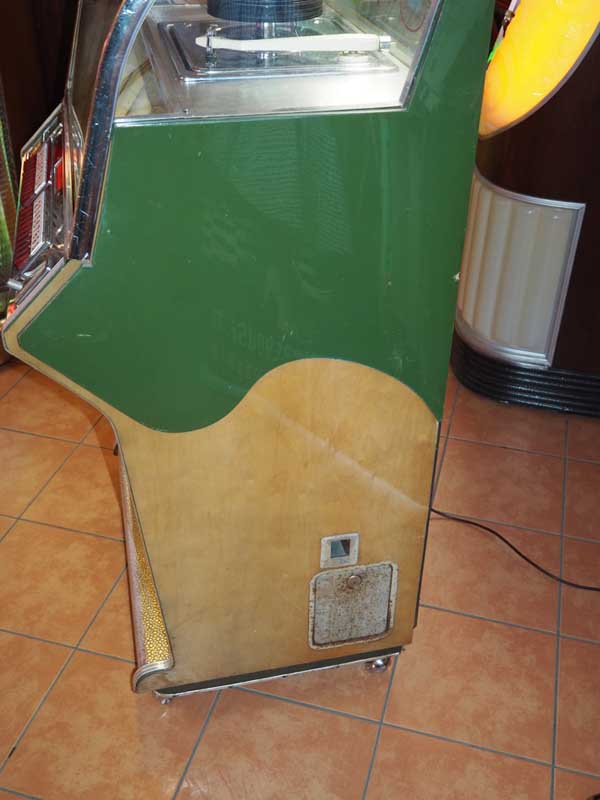
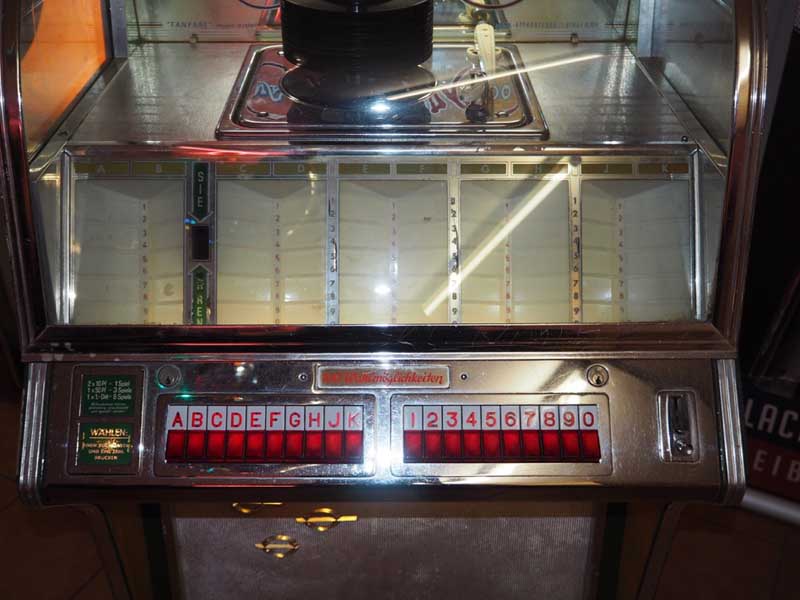
Hat jemand schon Erfahrungen gesammelt mit den Repro-Singles und der NSM
Fanfare 100 ..??
Das Problem bei der Fanfare ist ja, das nur die Singles aus dem dickeren
Vinyl (1950 / 1960iger Jahre) sauber gespielt bzw. abgeworfen werden.
1. Antwort: Als Besitzer einer Fanfare 100 habe ich die Erfahrung gemacht, dass diese
Musikbox zumindest bei mir recht unkritisch auf das Abspielen von Repro-Platten
reagiert, anders als manch andere deutsche Box (Panoramic, Eltec etc), die
ich bisher testen konnte.
Auch fällt mir auf, dass insbesondere diejenigen Boxen tendenziell
kritisch auf Repro-Scheiben mit Sprüngen oder Rillenhängern reagieren,
welche die Platten senkrecht abspielen.
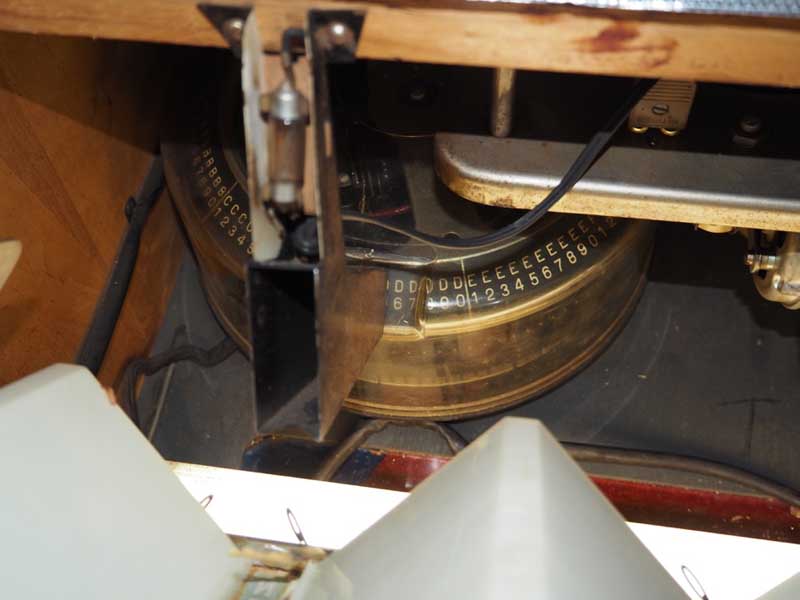
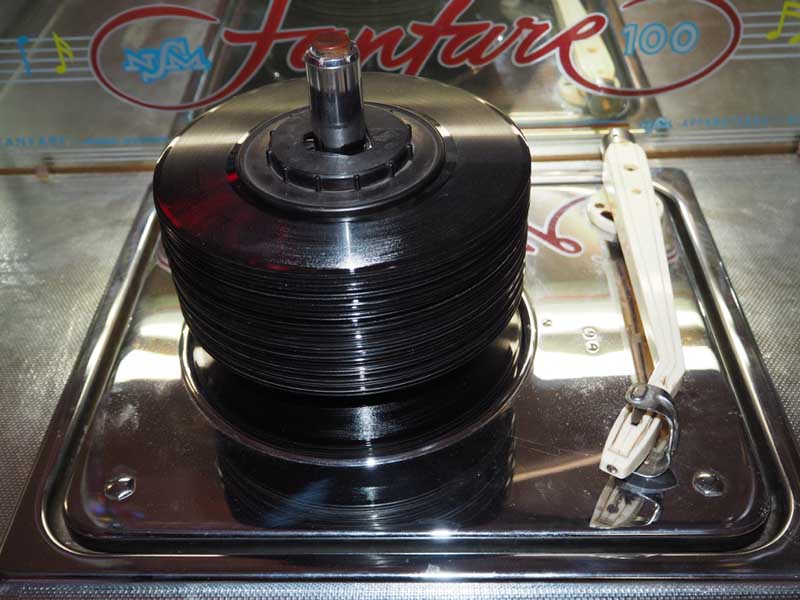
Bei der Fanfare 100 ist allerdings zu beachten, dass bei Verwendung der dünneren
Repros die Abspielhöhe der B-Seite in der Regel nicht mehr passt. Der
Plattenstapel verschwindet buchstäblich "in der Versenkung",
und der Tonarm kann dann nicht mehr aufsetzen. Ich habe deswegen einen
Distanzring von etwa 12 mm Stärke angefertigt, der im Plattenkorb oben
auf den Singlestapel gelegt wird, damit der Plattenstapel wieder mit der
Chassisabdeckung fluchtet und der Tonarm aufsetzen kann.
Ich glaube, es gab damals ab Werk hierfür sogar mal Distanzringe, um die
Plattenunterschiede auszugleichen.
2. Antwort: Es gab für die Fanfare Modelle Distanzringe um das Höhenniveau
auszugleichen. Für die 100er Modelle sogar noch einen speziellen
Plattenring, der verhinderte, dass die Ausgleichscheiben beim Abwurf der
obersten Platte mit herunterfallen!
Das Modell 100 Stereo reagiert auf "neuere" Platten unkritisch,
da hier das ELAC KST 103 System verwendet wurde. Bei älteren Mono-
Kristallsystemen verhärtet im Laufe der Zeit der Auflagesteg (aus Gummi)
der Nadel, so dass eine leichte Auslenkung nicht mehr gegeben ist.
Bei enger geschnittenen Platten macht sich das durch ein Springen
bemerkbar! Man kann diese Störung übrigens auch bei älteren "Füllschrift"
(Telefunken/ Decca) oder "Minigroove" (Philips) Schallplatten
erkennen.
Bei senkrechten abspielenden Mechanismen (z.B. NSM, Seeburg) liegt der
Fehler oft an nicht richtig ausbalancierten Tonarmen oder verhärteten
Tonabnehmerkabeln!
|
|
Has anyone had any experience with the
reproduction records and the NSM Fanfare 100?
The problem with the Fanfare is that only the records from the thicker vinyl
(1950s / 1960s) are played or dropped properly.
1st answer: As the owner of a
Fanfare 100, I have found that this jukebox reacts quite uncritically to playing
of reproduction records, unlike some other German jukeboxes (Panoramic, Eltec
etc.) that I have been able to test so far.
I have also noticed that especially those jukeboxes that play records vertically
tend to react critically to reproduction records with jumps or groove hangers.
With the Fanfare 100, however, it should be noted that when using the thinner
reproduction records, the playing height of the B-side usually no longer fits.
The record stack literally disappears "into the sinkhole" and the tone arm can
then no longer touch down. I therefore made a spacer ring about 12 mm thick,
which is placed on top of the stack of records in the record basket so that the
stack of records is flush with the chassis cover again and the tonearm can touch
down.
I think there were even spacer rings available from the factory at the time to
compensate for the differences between the records.
2nd answer: There were spacer
rings for the Fanfare models to compensate for the height level. For the 100
models there was even a special disk ring which prevented the shims from falling
off when the top record was dropped!
The 100 Stereo model reacts uncritically to "newer" records, as the ELAC KST 103
system was used here. With older mono crystal cartridges, the stylus support (made
of rubber) hardens over time, so that slight deflection is no longer possible.
This is noticeable in the form of jumping when the grooves are closer together!
Incidentally, this fault can also be recognized on older "Füllschrift"
(Telefunken/ Decca) or "Minigroove" (Philips) records.
With vertical playing mechanisms (e.g. NSM, Seeburg) the fault is often due to
incorrectly balanced tonearms or hardened pick-up cables!
|